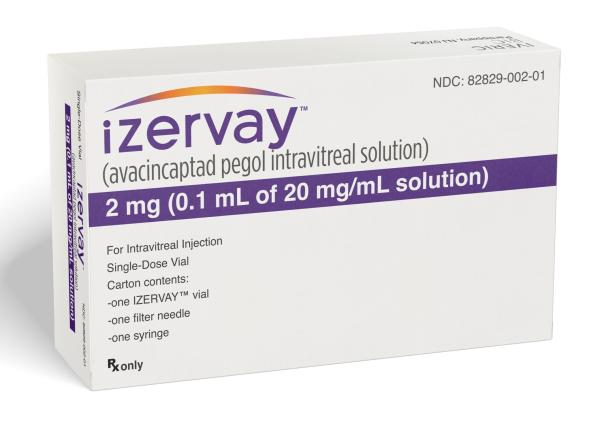
Izervay Gains FDA Approval for Dry Age-related Macular Degeneration
August 4, 2023
We are pleased to announce an important advancement in the treatment of geographic atrophy (GA), an advanced form of dry age-related macular degeneration (AMD). The U.S. Food and Drug Administration (FDA) approved IZERVAY® (avacincaptad pegol) for the treatment of geographic atrophy secondary to AMD in August 2023, providing retina specialists with an important new treatment option for patients affected by this progressive condition.
Geographic atrophy occurs when areas of the retina gradually lose important cells responsible for vision. As these areas of atrophy enlarge over time, patients may experience increasing difficulty with reading, recognizing faces, driving, and other activities that require central vision. Historically, treatment options for geographic atrophy were limited, making the development and FDA approval of therapies designed to slow its progression a significant milestone in retinal care.
IZERVAY is an injection administered into the eye that works by targeting the complement system, part of the body's immune system that plays a role in inflammation and the progression of geographic atrophy. Specifically, IZERVAY inhibits a protein called complement component 5 (C5). By blocking C5, IZERVAY is designed to reduce complement-related damage and slow the rate at which areas of geographic atrophy grow.
One of the ways IZERVAY is different from many other retinal treatments is its specific mechanism of action. Rather than treating fluid or bleeding associated with wet AMD, IZERVAY targets the complement pathway involved in the progression of geographic atrophy. In clinical studies, treatment with IZERVAY reduced the rate of geographic atrophy lesion growth compared with sham treatment, supporting its FDA approval as a treatment intended to slow disease progression.
It is important to understand that IZERVAY does not reverse existing retinal damage or restore vision that has already been lost. Its goal is to slow the progression of geographic atrophy and potentially preserve retinal tissue for a longer period of time. IZERVAY is administered as an injection approximately once every 28 days, and the decision to begin treatment should be made after a thorough evaluation and discussion with a retina specialist.
As with any treatment delivered by injection into the eye, IZERVAY has potential risks and side effects, including eye infection, retinal detachment, increased eye pressure, and an increased risk of developing wet AMD. Your retina specialist can discuss the potential benefits and risks and determine whether this treatment is appropriate for you.
The FDA approval of IZERVAY represents an important step forward in the management of geographic atrophy and offers eligible patients another option for slowing the progression of this vision-threatening disease.